So You're Thinking About Hosting a Con...
How to Put on a Beauty and the Beast Convention
Auctions
Some fans who will want to “donate to the auction” don’t really understand what that means. You may have to explain the difference between the Charity Auction and the Art Auction, or explain what the Silent Auction is, as well as what kinds of things go to the charity auction vs the dealers room or art show. If someone sends you a box of items “for auction,” don’t assume that it contains donations, or that the items are meant for the Charity Auction. Confirm with those sending or bringing you items “for auction” what they mean by that. Most times, if they want an item auctioned rather than straight-out sold, they will be fine with the Silent Auction process, where the owner is identified on the bid sheet.
For your charity auction you should try to have at least 20-25 CON-OWNED items of varying price points to offer for auction, so everyone can get in on the bidding. For most items, the rarer or more unusual the item, the better. Try to keep everything (or most things) B&B-related. Some of these items could start out in the silent auction and other items you may prefer to keep exclsively for the live auction. (But you may want to display the live auction items too, so fans know to keep some money in reserve to bid on them.)

In the past, if an item received two bids, it went to live auction. At recent cons, that’s been changed to 5 or 6 bids of silent auction first, to keep from having very long auctions. Only the most wanted items thus goes to live auction.
Silent auction can be used as part of both your charity auction and your art auction. The rules we usually use for silent auction are that when you run out of bid space on the bid sheet, that item goes to live auction. Design your bid sheet accordingly.
If an item receives fewer bids than needed to send it to live auction, the highest bidder at close of silent auction wins the item.
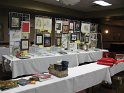
In recent years the charity and art auctions have been combined into one auction.
If you are holding a combined auction, you may like to let fans know when an item is con owned and 100% of the winning bid for that item will go to your charity. Include this info on the bid sheet.
To hold a smooth auction, you need a minimum of 3 people (4 or more is better). You can be one of them.
Auctioneer: Several fans who usually attend our cons are excellent auctioneers. You may wish to ask one or two to assist you in advance or (even better!) run the auction for you. If that can’t be done, and you’re doing it yourself (not advisable, given all you have to do behind the scenes), be energetic when auctioning items. If you can be funny, that's even better. Announce clearly when an item is SOLD and the name of the winning bidder and amount.
Walker: Make sure you have a helper or two to walk the items around so fans can see them up close, which increases interest and helps generate competition.
Media person: One idea is to have photos of the items on a thumb drive so they can be put up on the big screen, making it easy for fans to see what’s being auctioned. There's really no substitute for seeing the item in person up close though.
Recorder: Have someone you trust write down the winning bidder and amount for each auction item on the bid sheet and on separate pages by bidder. Ideally, have two helpers doing this. They should also group each fan’s winning items together for easy pickup.
Manager: Possibly you. Prior to the auction (or prior to the con even), decide which CON-OWNED items you will auction and in which sequence you will auction them – insert some lower-priced items in with the higher-priced ones. Do a little write-up for each item identifying the item and listing a starting bid. Write it on the bid sheets. Make sure you pull the items from storage and line them up so they are easily accessible during the auction, to keep things moving. During the auction, help the auctioneer by bringing items to her and taking them from her to hand to your walk-around helper. The guest auctioneer also may need help identifying bids, keeping track of the highest bid, and especially identifying the winning bidder so that the Recorder can write the information down.

Here are some sample logistics. It assumes 1 manager, 1 auctioneer, 1 walker, 1 recorder.
Before the auction (other con activities can be happening while helpers are doing this)
- Announce that silent bidding is closed.
- Separate items going to live auction from already won items.
- Won items can be paid for and taken away at this time.
- Determine order of items to be auctioned and line up the items on tables with their bid sheets.
- Manager brings next item and bid sheet to auctioneer.
- Auctioneer holds item for everyone to see and reads bid
sheet.
- Auctioneer gives items back to manager.
- Manager gives item to walker and bid sheet to recorder.
- Auctioneer takes bids. Walker shows item to bidders.
Recorder listens. Manager makes sure next item
is ready, helps with sorting of won items, and deals with anything else
that comes up.
- When item is sold, recorder notes winning bidder and amount
on bid sheet and list.
- Walker gives item to recorder
- Recorder attaches bid sheet to item and
sets item aside.
- After the auction, sort the won items by bidder to facilitate easy pickup.
- Make sure bid sheets and bid lists match.
- Give bid lists to dealer room workers or whoever is taking payments.
- Have fans collect bid sheets for their items, pay for their items and return to pick up their items. You keep the bid sheets.
At the end of the convention, your helpers need to ensure that all won items have been picked up, that unsold items are boxed up for transfer to the next con chair, and that display units (if you used them) are dismantled to be given to the next con chair.
If at all possible, volunteer at the con or two before yours to help with the auctions. There is no substitute for experience, and apprenticing yourself is a perfect way to learn the ins and outs of this, and all portions of the con.